

Service: Optical Coherence Tomography (880 nm)
Platforms
Molab
Techniques
Optical coherence tomography (oct)
Technology Readiness Level
9 - service proven in operational environment (production)
Organization

Service contact persons
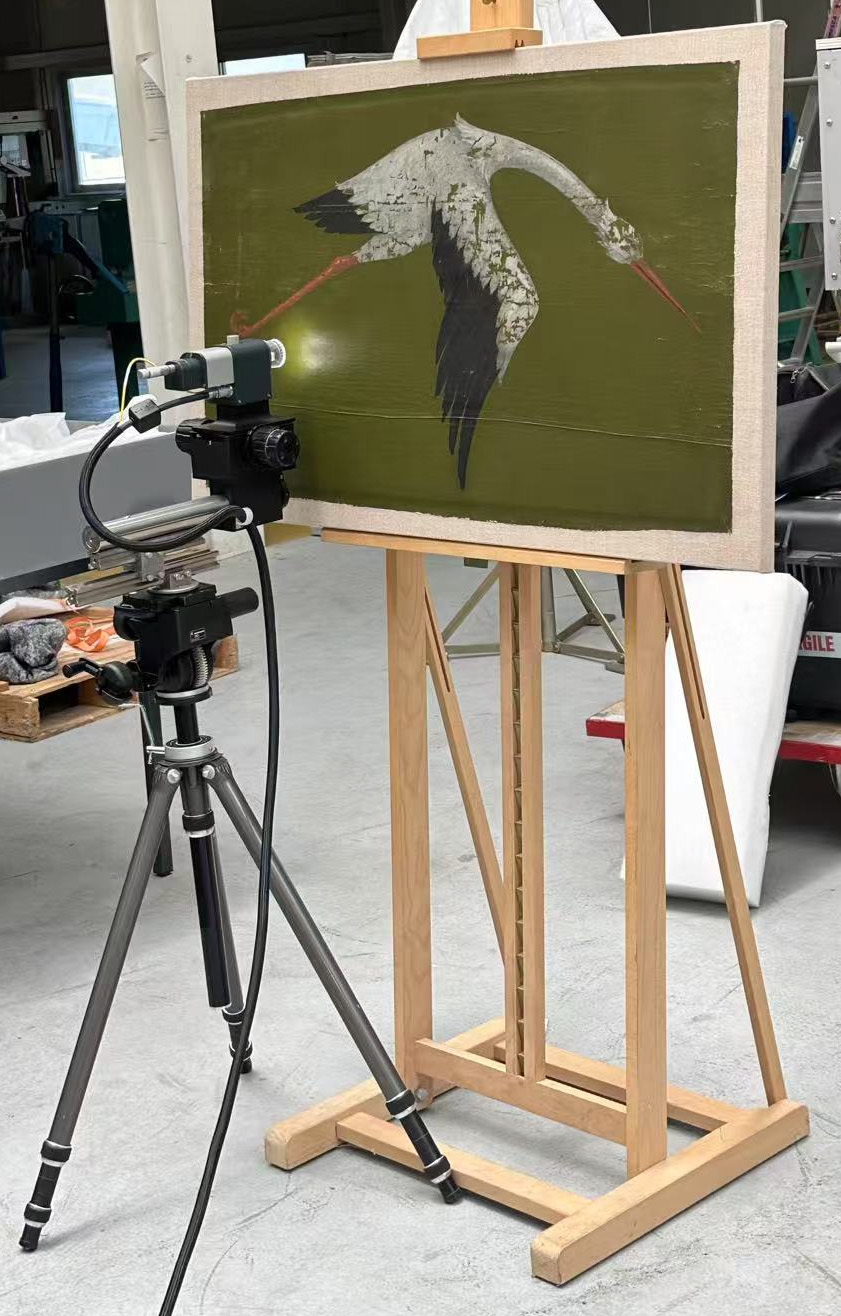
Optical Coherence Tomography (OCT) is a non-invasive technique that provides high-resolution 3D cross-sections of translucent materials without contact or radiation. Using 880 nm light, it visualizes internal microstructures up to 2 mm deep with sub-10 μm precision. It is highly valuable in cultural heritage diagnostics and research due to its safety, precision and ease of use.
Optical Coherence Tomography (OCT) is a non-invasive imaging technique that uses 880 nm light and interferometry to capture high-resolution, cross-sectional images of translucent materials with sub-10 μm precision. This contact-free technology produces 3D reconstructions of internal microstructures up to 2 mm deep without requiring sample preparation or ionizing radiation. In cultural heritage, it is an essential diagnostic tool for analyzing artwork stratigraphy, allowing researchers to distinguish between varnish, paint, and ground layers safely. It is particularly effective for inspecting and measuring the thickness of varnishes or protective coatings and detecting hidden sub-surface damage, such as cracks or voids, within sculptures and ceramics, especially in translucent materials.
The materials need to be translucent or transparent around 880 nm
Fields of application
Applied physics
Conservation science (cultural heritage discipline)
Heritage science (cultural heritage discipline)
Optics
Materials
Ceramic glaze
Paintings
Varnish
Protective coating
Protective glazing